
The slip stitch is often the very first technique taught right after the chain stitch, and yet it’s also one of the most consistently underused stitches by crocheters who’ve moved on to more “interesting” stitches. That’s a shame, because the slip stitch does real, specific jobs that no other stitch does quite as well. This guide covers exactly what it is, why it matters, and how it compares to the stitches covered in our comparison of single crochet vs half double crochet vs double crochet.
What the Slip Stitch Actually Is
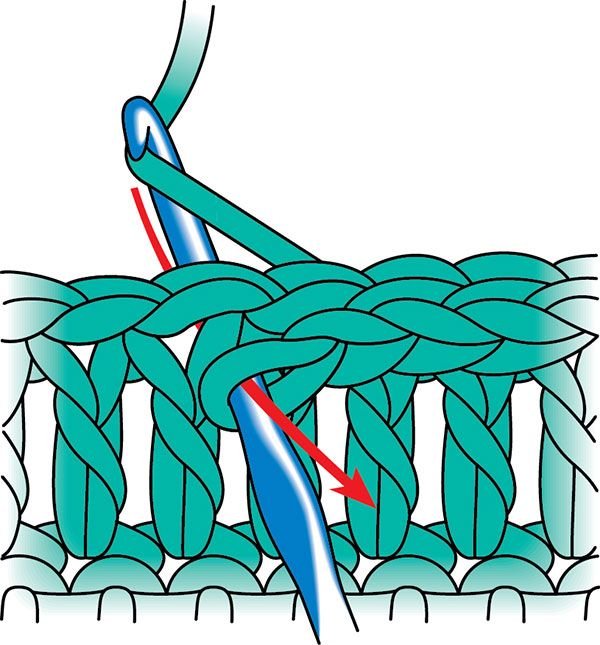
A slip stitch is worked by inserting your hook into a stitch, yarning over, and pulling that new loop through both the stitch and the loop already on your hook, all in a single motion. Unlike single crochet, which takes two steps to complete, a slip stitch is done in one, and it adds essentially no height to the fabric. That flatness is precisely what makes it useful.
Why the Slip Stitch Feels “Boring” Compared to Other Stitches
Because it doesn’t build up fabric the way single, double, or half double crochet do, the slip stitch can feel like it’s not really “doing” anything when you’re first learning it, especially compared to the visible progress of taller stitches. But its lack of height isn’t a limitation; it’s the entire point. The slip stitch exists specifically for situations where you need to move your hook, join pieces, or finish an edge without adding bulk or visible structure.
Joining Rounds
The most common traditional use of the slip stitch is closing a round. After working all the stitches in a round, slip stitching into the first stitch connects the end of the round back to its beginning, creating a clean, closed circle rather than leaving the round open or spiraling.
Moving Across Stitches Without Adding Height
Sometimes a pattern needs you to reposition your hook to a different starting point within a round, without actually working new stitches into the space you’re passing over. Slip stitching across those stitches lets you travel to the correct starting point invisibly, since the slip stitches themselves add virtually no visible bulk.
Joining Pieces Together
Beyond joining a round to itself, slip stitches are also commonly used to join two separate pieces, like connecting granny squares or attaching a motif to a main body, working through corresponding stitches on each piece to link them together with a flat, low-profile seam.
Creating a Finished Edge
A round of slip stitches worked around the outer perimeter of a finished piece gives a clean, defined edge without adding the height or bulk that even a single crochet border would introduce, which is particularly useful for pieces where a very subtle, minimal finish is the goal.
Slip Stitch Crochet as a Standalone Technique
Beyond these supporting roles, an entire style of crochet called slip stitch crochet (sometimes called Bosnian crochet or shepherd’s knitting) uses the stitch as the primary fabric-building technique throughout an entire project, producing a dense, knit-like fabric quite different from the more open, textured look of taller stitches. This is a less common but genuinely distinct approach some crocheters specifically seek out for its unique texture and drape.
Common Mistakes When Working Slip Stitches
Working them too tightly. Since a slip stitch is already flat and compact, working it with the same tension as your regular stitches can make it feel disproportionately tight and difficult to work through on a subsequent round or when joining. Slightly looser tension specifically for slip stitches often produces a more workable result.
Confusing it with a single crochet. Because both stitches involve inserting the hook and yarning over, it’s easy for beginners to accidentally add an extra step and end up with a short single crochet stitch instead of a true, flat slip stitch. The key difference is that a slip stitch pulls through both loops in one single motion, without a separate pull-through step afterward.
Using it where a different stitch was actually intended. Some patterns specifically call for slip stitches at points where a beginner might expect a “real” stitch, and skipping or substituting a different stitch there can throw off the pattern’s intended structure or joining method.
Common Mistakes to Avoid
- Working slip stitches with the same firm tension as taller stitches, making them unnecessarily tight and hard to work through later.
- Confusing a slip stitch with a very short single crochet, missing the key difference in how the loops are pulled through.
- Skipping a pattern’s specified slip stitch join, substituting a different technique without understanding why the slip stitch was chosen.
- Assuming slip stitches are only useful for joining rounds, overlooking their broader usefulness for edges and piece assembly.
Tips for Better Results
- Practice working slip stitches at a slightly looser tension than your regular stitches, since this generally makes subsequent rows or joins easier to work.
- Use slip stitches deliberately whenever you need to move your hook to a new position without adding visible height, rather than working unnecessary extra stitches.
- If a pattern calls for a slip stitch join between pieces, try it as written before substituting a bulkier joining method, since the flat profile is often specifically intended.
- Consider exploring slip stitch crochet as a standalone technique if you’re curious about a denser, more knit-like fabric texture than typical crochet produces, a variation documented in the Craft Yarn Council’s crochet terminology reference.
Frequently Asked Questions
Is the slip stitch considered a “real” stitch, or just a joining technique? It’s a genuine stitch in its own right, with its own specific structure and uses, even though it’s most commonly encountered as a supporting technique for joining and finishing rather than as the primary fabric-building stitch in most patterns.
Why does my slip stitch join feel really tight and hard to work into on the next round? This usually happens when the slip stitch is worked at the same tension as your regular stitches. Consciously working the slip stitch slightly looser tends to resolve this, making the resulting loop easier to work into afterward.
Can I use a slip stitch instead of single crochet if I want a flatter edge? Yes, a round of slip stitches produces a noticeably flatter, more subtle edge than single crochet, making it a good choice when you specifically want minimal added bulk or height at a border.
What’s the difference between slip stitch crochet and regular crochet using slip stitches occasionally? Slip stitch crochet is an entire technique where slip stitches build the primary fabric throughout a whole project, producing a dense, knit-like result, while most crochet only uses slip stitches for specific supporting purposes like joining or edging within an otherwise taller-stitch project.
Is it normal for slip stitches to look almost invisible compared to other stitches? Yes, their minimal height and flat profile are exactly what make them useful for their typical purposes, so looking subtle or nearly invisible within a finished piece is expected rather than a sign anything went wrong.