
A wobbly amigurumi that tips over the moment you set it down, or one that slumps into a puddle of stitches rather than holding its intended pose, is usually a stuffing and construction issue rather than a fundamental design flaw. This guide covers the specific techniques that help amigurumi stand independently, from stuffing density to base construction, building on our guide on why amigurumi isn’t round.
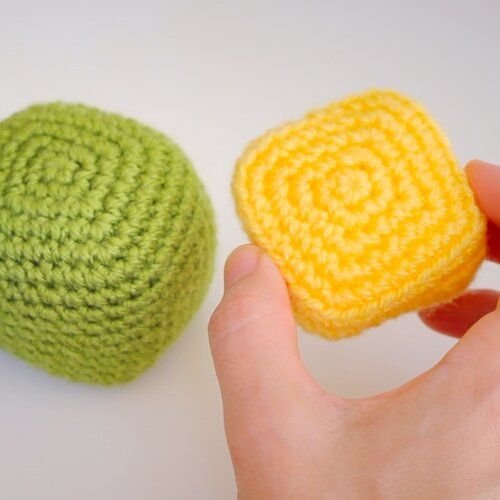
Why Some Amigurumi Stand and Others Don’t
Standing amigurumi depend on a combination of factors working together: a wide enough, firm enough base to provide stability, dense enough fabric and stuffing to support the piece’s own weight without collapsing, and a low enough center of gravity that the piece doesn’t tip. Missing any one of these can undermine an otherwise well-made toy’s ability to stand on its own.
Building a Stable Base
Widen the base relative to the body. A base that’s proportionally too narrow for the amigurumi’s overall height creates an inherently unstable structure, similar to a tall, thin object balanced on a small point. Some patterns specifically design a wider base or separate feet precisely to address this.
Flatten the very bottom of the base. Rather than leaving the base perfectly rounded, gently flattening the bottom few rounds, either during construction or through careful stuffing and shaping, creates more surface contact with whatever flat surface the piece will stand on.
Consider adding weighted material to the base. Some crocheters add a small amount of plastic poly pellets or a fabric-wrapped weight, like a washer or small stone, to the very bottom of a base before stuffing with regular fiberfill on top, lowering the piece’s center of gravity significantly.
Stuffing Density and Distribution
Stuff more firmly than feels intuitive at first. A common beginner tendency is under-stuffing, leaving a piece too soft and prone to collapsing under its own weight rather than holding a defined shape.
Distribute stuffing evenly, working from the bottom up. Starting with a generous, even layer at the base and working upward, rather than stuffing randomly, helps ensure the foundation is solid before the upper body’s weight rests on it.
Avoid stuffing clumps or air pockets. Use a stuffing tool or the blunt end of a crochet hook to push fiberfill into edges and corners evenly, breaking up any clumps as you go, since uneven internal distribution can create weak points that buckle under weight.
Reinforcing Legs and Feet if Applicable
For amigurumi with separate legs or feet, stuffing those sections particularly firmly, and ensuring they’re securely and squarely attached to the body at an angle that supports the piece’s balance, matters significantly for overall stability.
Checking attachment angle: Legs attached at a slight outward angle, rather than straight down or angled inward, often provide a wider, more stable stance than a narrower attachment would.
Testing and Adjusting Before Final Assembly
Before permanently attaching all pieces, test-balancing the partially assembled amigurumi on a flat surface can reveal stability issues while they’re still easier to correct, rather than discovering the problem only once every piece is permanently sewn in place.
When a Standing Design Isn’t Realistic
Some amigurumi shapes, particularly very tall, narrow designs or animals with naturally unstable proportions like long-necked creatures, may simply not be well suited to standing independently regardless of stuffing technique. In these cases, some crocheters add a small, separate flat base or stand specifically designed to support the piece, rather than fighting the design’s inherent proportions.
Common Mistakes to Avoid
- Under-stuffing a piece, leaving it too soft to support its own weight and hold an intended standing pose.
- Building a base that’s proportionally too narrow relative to the amigurumi’s overall height.
- Stuffing unevenly, leaving weak, sparsely filled areas that buckle under pressure.
- Attaching legs or feet at an angle that undermines rather than supports overall balance.
Tips for Better Results
- Stuff more firmly than feels natural at first, checking that the piece holds a defined, solid shape rather than feeling soft or squishy.
- Flatten the bottom of the base deliberately, either through careful stuffing or gentle shaping, to maximize surface contact with a flat resting surface.
- Test balance before final assembly, adjusting stuffing or attachment angles while it’s still easy to make changes.
- Consider a weighted base for particularly tall or top-heavy designs, giving the piece a genuinely lower center of gravity rather than relying on stuffing firmness alone, keeping any added weight securely enclosed per general craft safety practices from the Craft Yarn Council.
Frequently Asked Questions
Is it normal for amigurumi to need extra reinforcement to stand, or should a good pattern handle this automatically? Well-designed patterns intended for standing pieces do account for proportions and base width, but stuffing technique still plays a significant role in whether that design potential is actually realized in your specific finished piece.
Can I add a weight to an amigurumi after it’s already stuffed? It’s more difficult after the fact, since you’d need to remove some existing stuffing to add a weight at the base, which is why planning for a weighted base from the start, if needed, is generally more straightforward than retrofitting one later.
Does yarn fiber affect how well an amigurumi stands? Indirectly, yes. A denser, tighter fabric (often achieved with a smaller hook and firmer tension) provides better structural support than a looser fabric, regardless of the specific fiber used.
Why does my amigurumi lean to one side instead of standing straight? This often points to uneven stuffing distribution or an asymmetrical base, where one side has more support than the other, causing the piece to tip toward the less supported side.
Should all amigurumi be designed to stand on their own? Not necessarily. Many amigurumi are intended to sit, lie down, or be displayed in a specific pose rather than stand independently, so standing capability is only relevant if that’s the specific design goal for a particular piece.